For users seeking a scalable and versatile data extraction solution, yes, Apify is worth it for web scraping in 2026 because it provides a powerful cloud platform with a vast library of pre-built tools for both developers and non-coders. Its combination of ready-made "Actors" and a robust custom development environment makes it a highly effective choice for a wide spectrum of data automation projects.
Apify is a comprehensive cloud platform engineered for web scraping and process automation, enabling users to extract structured data from any website and automate complex digital workflows. It furnishes the necessary infrastructure, development tools, and an extensive library of ready-to-use solutions called Actors to manage everything from simple data gathering to sophisticated processes involving JavaScript rendering, proxy rotation, and advanced anti-blocking techniques.
Looking for more AI tools? Explore 500+ ranked options at top10k.com before deciding.
This detailed review offers an in-depth analysis of Apify's core features, its usage-based pricing structure, and aggregated user feedback from multiple sources. We will dissect its primary functionalities, evaluate the advantages and disadvantages highlighted by real-world users, and scrutinize its performance in overcoming advanced scraping hurdles to help you decide if it aligns with your specific requirements.
Why Is Apify Considered a Strong Choice for Web Scraping in 2026?
Apify is considered a strong choice for web scraping in 2026 because it uniquely caters to both technical and non-technical users through its flexible, dual-approach platform. It offers pre-built "Actors" for immediate automation alongside a powerful serverless environment for creating custom solutions. To fully assess its value, we must examine its target user base, overall market sentiment, and its fundamental value proposition.
The platform's primary strength lies in this dual functionality. For individuals who are not developers or teams that require immediate results, the Apify Store provides access to thousands of pre-built tools designed to scrape popular websites and automate common online activities. Conversely, for developers, Apify delivers a serverless cloud environment where they can build, execute, and scale their own custom scraping solutions using standard technologies like JavaScript and Python, all without the burden of managing servers or proxy infrastructure. This inherent versatility makes it a suitable platform for a diverse range of projects, from small-scale data collection for academic research to enterprise-grade web automation and monitoring.
User reviews on prominent software review platforms consistently show positive sentiment. On G2, Capterra, and Trustpilot, users frequently commend Apify for its powerful feature set, impressive scalability, and highly responsive customer support. While some users mention a notable learning curve for custom development and a pricing model that can be complex to forecast, the overwhelming consensus is that Apify provides a dependable and feature-rich service. Given its comprehensive features, flexible pricing that includes a valuable free tier, and robust performance, Apify is a compelling option for anyone serious about web scraping and data automation.
What Is Apify and How Does Its Platform Function?
Apify is a cloud-based web scraping and automation platform that empowers users to extract data from websites and automate repetitive online processes. Its fundamental purpose is to supply the tools and infrastructure required to transform any website into a structured API. To accomplish this, the platform is architected around several key components that work in concert to streamline the entire data extraction lifecycle.
The platform's operation is centered on three foundational pillars: Actors, the Apify Store, and the underlying cloud infrastructure. Actors are essentially serverless cloud programs engineered to perform any task a human can execute within a web browser. Their complexity can range from simple actions, like extracting headlines from a news portal, to highly intricate operations, such as monitoring competitor pricing across thousands of e-commerce product pages. The Apify Store functions as a public library or marketplace where users can discover thousands of pre-built Actors developed by the community, which allows non-programmers to begin scraping data almost instantly. Finally, Apify’s robust infrastructure abstracts away all the technical complexities, including server management, operational scaling, and proxy rotation to prevent blocks, thereby enabling users to concentrate exclusively on their data collection logic.
What Are the Key Features of Apify?
Apify's key features are the Apify Console, the Apify Store with its vast Actor library, custom Actor development capabilities, Schedulers for automation, and extensive integrations. This powerful combination of tools creates a complete ecosystem for web scraping and automation. To better understand the platform's utility, let's explore each of these core features in greater detail.
The Apify Console serves as the central hub for managing all scraping and automation activities.
- Apify Console: This is the web-based central dashboard for managing all your scraping and automation activities. It provides a user-friendly interface to run Actors, configure and manage schedules, view and export results, and monitor resource consumption in real-time.
- Apify Store: A significant competitive advantage, the Apify Store hosts thousands of ready-made Actors for scraping popular and complex websites like Amazon, Google Maps, Instagram, and Zillow. This empowers users without coding expertise to leverage powerful scraping tools immediately.
- Custom Actors: For developers, Apify offers a potent serverless environment to build, deploy, and run custom scrapers using Node.js or Python. The platform manages the underlying infrastructure, from servers to proxies, allowing developers to focus entirely on writing effective scraping logic.
- Schedulers: This feature allows users to fully automate their data collection tasks by setting Actors to run at specific, recurring intervals, such as hourly, daily, or on a custom cron schedule. This is perfect for ongoing monitoring of price changes, tracking social media engagement, or aggregating data over time.
- Integrations: Apify enables seamless connection of your scraping jobs to other applications and services. It provides direct integrations with popular tools like Google Sheets, Airtable, and Zapier, in addition to offering webhook and API access for building custom data pipelines.
- Advanced Scraping Capabilities: The platform is engineered to handle complex scraping scenarios. This includes rendering websites that heavily rely on JavaScript, navigating through complex pagination systems, and automatically managing proxy rotation to avoid IP bans and CAPTCHAs.
- Generous Free Tier: Apify provides a permanent free plan that includes a monthly allowance of platform credits. This allows new users to thoroughly test the platform's features and run small-scale projects without any initial financial commitment. ### How Much Does Apify Cost?
Apify's pricing is built on a usage-based model with several distinct tiers, including a permanent Free plan, a Personal plan for individuals, and a Team plan for businesses. Costs are calculated based on the consumption of platform credits, which are used for compute units, proxy services, and data storage. Let's examine the different plans and the mechanics of the usage-based model.
Comparing alternatives? Discover the full ranked list on https://top10k.com before committing to any single platform.
The pricing structure is designed to be flexible and scale with your project's demands. The table below provides a summary of Apify's main subscription plans. This overview helps potential users compare the features and resource allocations of each tier.
| Feature | Free Plan | Personal Plan | Team Plan |
|---|---|---|---|
| Monthly Price | $0 | Starts at $49 | Starts at $499 |
| Platform Credits | $5 Included | $49 Included | $499 Included |
| Data Retention | 7 Days | 14 Days | 30 Days |
| Max Concurrency | 3 | 8 | 32 |
| User Seats | 1 | 1 | Unlimited |
| Support | Community | Priority Email & Chat |
The foundation of Apify's pricing is its pay-for-what-you-use system. Users purchase or are allocated platform credits, and these credits are consumed based on three primary factors:
- Compute Units (CUs): This metric quantifies the memory and CPU time your Actors consume during a run. More computationally intensive tasks, like rendering heavy JavaScript pages, will use more CUs.
- Proxy Usage: Costs are incurred based on the type of proxy used (datacenter or residential) and the amount of bandwidth consumed. Residential proxies are more expensive but more effective at avoiding blocks.
- Data Storage: Storing the datasets generated by your scraping runs also consumes credits. The cost depends on the volume of data and the selected retention period, which varies by plan.
This model offers excellent flexibility, as you only pay for the resources you actively consume. However, it can also make cost forecasting challenging for large-scale or unpredictable workloads without initial testing and optimization.
What Do Users Say Are the Pros and Cons of Apify?
Users consistently praise Apify for its power, flexibility, and extensive library of pre-built scraping tools, while some identify its complex pricing model and the learning curve for custom development as potential drawbacks. By analyzing and synthesizing verified user reviews from platforms like G2, Capterra, and Trustpilot, we can construct a balanced and comprehensive view of the platform's primary strengths and weaknesses. Next, we will explore these reported advantages and disadvantages in greater detail.
What Are the Main Advantages of Using Apify?
The main advantages of using Apify, as reported by its user base, are its exceptional ease of use with pre-built Actors, its powerful and highly scalable infrastructure, its excellent customer support, and its generous free plan. These key factors combine to make it a compelling option for a broad audience, from beginners to enterprise teams. To understand why users rate Apify so highly, let's investigate these benefits more closely.
- Ease of Use and Pre-built Actors: The most frequently mentioned advantage is the Apify Store. For users who lack a technical background or need to gather data quickly, the ability to find and run a ready-made scraper in just a few minutes is a major time-saver that significantly lowers the barrier to entry for web data extraction. * Powerful and Scalable Infrastructure: Developers highly value that Apify abstracts away all the complexities of infrastructure management. The platform's capacity to automatically scale runs, manage sophisticated proxy networks, and handle JavaScript-intensive websites allows them to concentrate on data extraction logic instead of server maintenance and DevOps.
- Excellent Customer Support: Numerous reviews emphasize Apify's responsive, knowledgeable, and helpful customer support team. Users consistently report receiving prompt and effective assistance through live chat and email channels, which is critical when troubleshooting complex scraping challenges or optimizing performance.
- Generous Free Plan: The free tier is often cited as a major benefit. It provides a sufficient allocation of platform credits for users to thoroughly evaluate the platform's capabilities, run small personal projects, or learn how to build custom Actors without any upfront financial investment.
- Flexibility for Developers: The platform provides a robust and well-documented environment for creating custom data extraction solutions. Developers can use familiar technologies like JavaScript (Node.js) and Python, utilize Apify's comprehensive SDKs, and integrate their scrapers with external systems via APIs and webhooks.
What Are the Main Disadvantages of Using Apify?
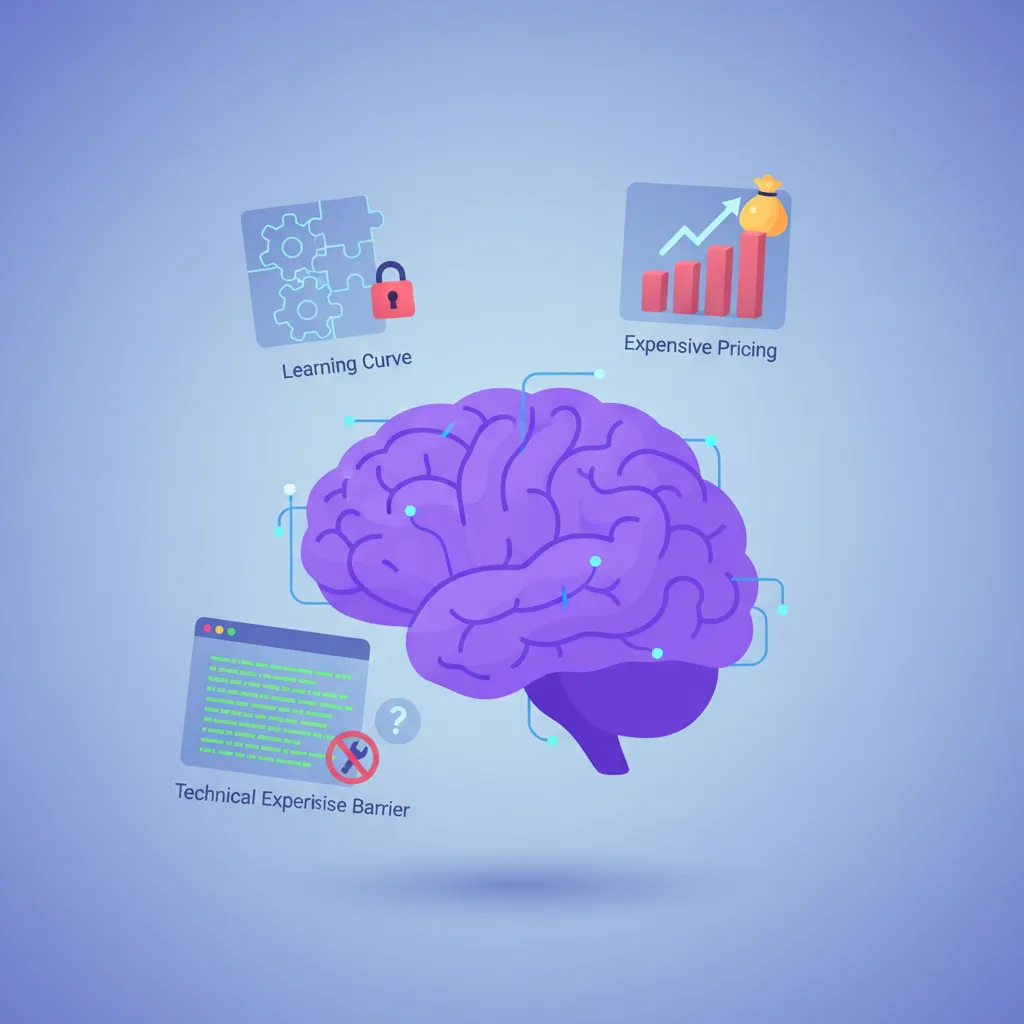
The main disadvantages of Apify, as noted in user feedback, include its potentially complex and expensive pricing model for high-volume usage and the steep learning curve required for creating custom Actors. Some users also suggest that the documentation for highly advanced features could be more detailed. Let's delve into these potential downsides to provide a complete picture.
- Complex Pricing Model: While the usage-based pricing offers flexibility, it can be difficult to predict costs accurately, and it may become expensive for large-scale, continuous scraping operations. Estimating the consumption of compute units and proxy bandwidth requires experience and testing, and costs can escalate unexpectedly if a scraping job is not optimized for efficiency. * Learning Curve for Customization: While using pre-built Actors from the store is very straightforward, developing a custom Actor from scratch demands solid programming skills, particularly in Node.js or Python. It also requires an understanding of the Apify platform's specific APIs, libraries, and conventions, which can present a significant hurdle for beginners or developers transitioning from other scraping frameworks.
- Documentation for Advanced Features: Some experienced users have reported that while the basic documentation is excellent, finding clear, step-by-step guidance for highly advanced or niche use cases can sometimes be challenging. Improving the depth and breadth of technical documentation for edge cases is a common piece of constructive feedback. * UI/UX Can Be Overwhelming: For new users, the Apify Console, with its multitude of settings, logs, and configuration options, can feel overwhelming at first. Learning to navigate the various components like Actors, tasks, schedules, and storage effectively takes time and practice.
How Does Apify Handle Advanced Scraping Challenges?
Apify handles advanced scraping challenges by providing a deeply integrated infrastructure that directly addresses the most common and difficult obstacles in modern data extraction. It moves beyond basic scraping tools by offering built-in, automated solutions for proxy management, JavaScript rendering, and handling authentication. To appreciate its technical capabilities, it is crucial to examine how it manages these specific issues, which are often significant pain points for developers. This built-in functionality is what differentiates Apify from simpler tools and establishes it as a powerful platform for professional use cases, including scraping complex data sources like those found on https://top10k.com/.
Does Apify Offer Built-in Proxies for Scraping?
Yes, Apify offers a fully integrated and managed proxy service that includes both high-speed Datacenter proxies and high-quality Residential proxies. This feature is fundamental for conducting reliable and large-scale web scraping operations without interruption. The platform's built-in proxy service automatically handles IP rotation, session management, and geo-targeting, which simplifies one of the most complex aspects of web scraping. Consequently, users do not need to subscribe to, manage, and integrate a separate third-party proxy provider. The entire system is engineered to help scrapers avoid IP-based blocking, bypass CAPTCHAs, and prevent being served misleading or cloaked information by target websites.
Can Apify Scrape Websites That Require User Logins?
Yes, Apify Actors can be programmed to scrape websites that require user logins and are protected by authentication measures. This is a critical feature for extracting data from private user dashboards, social media profiles, or any personalized web application. This functionality is achieved by programming the Actor to automate the login process, either by programmatically filling out a login form with provided credentials or by using pre-existing session cookies to establish an authenticated state. Once logged in, the Actor can maintain the session to navigate through and extract data from pages that are only accessible to authenticated users, a sophisticated capability not found in many basic scraping tools on sites like https://top10k.com/.
To start automating your data extraction and web scraping tasks with a powerful and scalable platform, consider trying Apify.
https://capcutaffiliateprogram.pxf.io/R067oN
For a broader look at AI tools across every category, visit top10k.com to explore the full collection.